Sometimes you would like the predictability of a significant luxury hotel brand or the flexibility to redeem loyalty points. But Italy has long excelled at something else: independently owned boutique hotels which are small in scale and filled with soul. Across the country, a lot of the perfect luxury hotels are still family-run, often for generations, whether inside converted palazzi, countryside estates, or glamorous seaside retreats.
Alongside the hallmarks of luxury hospitality—excellent restaurants, anticipatory service, and restorative spas—these hotels often have a warmth and individuality that may feel harder to seek out at larger global brands. For Afar’s Hotels We Love series, we’re spotlighting Italy’s best boutique and independently owned hotels.
Atelier Inès Art & Suites
Naples has exploded in popularity in recent times, although the town’s hotel scene still lags behind its culinary and cultural offerings. A unusual exception is Atelier Inès Art & Suites, a nine-room boutique hotel attached to a working art studio run by Vincenzo Oste and his wife, Inès Sellami.
Set within the bustling Rione Sanità neighborhood, the property is Oste’s former family home and studio; his great-grandfather constructed the constructing in 1947. Nearly every thing contained in the hotel is handmade, from the ceramic tables within the breakfast room to the cupboards that contain the minibars, sculptural doorknobs, and towel racks within the suites. There’s no restaurant, but Oste and Sellami are blissful to share their favorite local spots and help make reservations.
Casa Maria Luigia
Casa Maria Luigia is a 22-room villa within the Modena countryside conceived by world-renowned chef Massimo Bottura (of three Michelin-starred Osteria Francescana in Modena) and his wife, Lara Gilmore. Equal parts culinary destination, contemporary art haven, and design retreat, the property appears like checking into someone’s well-curated Italian home. From the art on the partitions and Bottura’s vinyl collection to the homemade cookies waiting within the fridge, nearly every detail reflects the couple’s tastes and obsessions.
Guests can sample retired dishes from Osteria Francescana’s menu at Francescana at Maria Luigia, or have a more laid-back meal of wood-fired cooking at Al Gatto Verde. Don’t skip breakfast—it’s a sprawling spread of traditional Emilian dishes like gnocco fritto and erbazzone along with cinnamon buns and chocolate chip cookies, a nod to Gilmore’s American roots.
Works by Ai Weiwei, Joseph Beuys, and Cindy Sherman amongst other distinguished artists appear throughout the retreat, and guests are encouraged to drag records from the couple’s extensive vinyl library. Recent additions include latest rooms and suites at Casa Lu, pasta-making classes, and a daytime dining menu available exclusively to hotel guests. There’s also an on-site acetaia offering tours and balsamic vinegar tastings.
Related: These Are the 15 Best Hotels in Italy
Castello di Vicarello
The Baccheschi Berti family spent three many years renovating Castello di Vicarello, a once-abandoned Twelfth-century castle tucked deep in Tuscany’s Maremma region. Originally purchased in 1979 as a family vacation home, it now appears like a classy private residence spread across an enormous estate. There are only 11 rooms and suites, so the atmosphere stays intimate even when the hotel is full.
No two accommodations are alike. Some have lofted sleeping areas or original fireplaces, while others open onto countryside views. Throughout, the design reflects the family’s eclectic eye, with furnishings collected in Indonesia, Moroccan rugs, and one-of-a-kind antiques and textiles.
To get to the dining room, guests pass directly through the open kitchen, often catching the chef with a cooking class or preparing the evening meal. Much of the produce comes from the estate’s garden or nearby farms, and the property also makes its own wine, offered in tastings led by the sommelier. Other seasonal activities include truffle hunting, climbing on the paths, or going for a ride on considered one of the property’s e-bikes. Recent this 12 months is a perfume-making class and personal airplane tours.
Related: These Are the 15 Best Hotels and Resorts in Tuscany
Hotel Il Pellicano
The enduring Hotel Il Pellicano, a slice of los angeles dolce vita on the glittering Mediterranean Sea, has been a fixture of the jet set because the Nineteen Sixties. Originally built because the home of an American socialite and a British aviator, who invited their famous and aristocratic friends, Il Pellicano opened as a hotel in 1965 and was bought by frequent guest Roberto Sciò in 1979. Today it’s run by his daughter Marie-Louise Sciò, a modern-day icon of Italian style. The airy, terra-cotta-floored guest rooms have balconies or terraces that spill into manicured gardens.
That is the place to spend lazy days lounging on the beach club or by the pool, sipping an Aperol Spritz on the terrace, and savoring leisurely meals on the Michelin-starred Ristorante Il Pellicano. The hotel has made an admirable commitment to sustainability, with initiatives starting from partnering with marine conservation NGO Marevivo on beach maintenance to reducing single-use plastic waste and switching to one hundred pc renewable energy sources where possible. In 2026, 23 of the 50 rooms and suites were refurbished, and a renovated elevator now links the upper pool terrace with the beach below.
Hotel La Perla
Annie and Ernesto Costa founded Hotel La Perla in 1957, and so they still live to tell the tale the third floor, though they handed over the reins to their three sons, who run the hotel with aplomb. At first glance, Hotel La Perla looks like a big traditional alpine chalet, but take one other look and also you’ll discover all types of quirky touches, from the inventive cuisine on the Michelin-starred restaurant to the trippy wine cellar tour animated by kinetic installations and rock music.
The 51 guest rooms and suites have rustic alpine style and postcard-worthy mountain views. Most guests go for half board to enjoy breakfast and dinner at considered one of the 4 restaurants after a day of skiing on the slopes or climbing within the mountains. (Complimentary guided hikes can be found in the summertime.) The newly refurbished and expanded spa and beer garden are ideal places to calm down après-ski or post-hike. Sustainability measures include sourcing food locally and seasonally, minimizing food waste, recycling, and offering guests incentives like a free night of accommodation in the event that they don’t use their cars during their stay.
Related: These Are the ten Best Hotels within the Dolomites
Hotel Santa Caterina
Set along the coastal road just outside the middle of Amalfi, Hotel Santa Caterina spills down the side of the mountain, with terraced gardens, suites built into the side of the cliff, and a beach club with a saltwater pool hewn into the rock. The principal constructing was once the Gambardella family home, and so they’re still very present, personally welcoming guests and ensuring that every thing runs easily. They opened their doors to guests in 1904, and ever since, generations have been returning and requesting the identical room.
Every 12 months, when the hotel closes for the winter, the owners renovate a handful of the 66 guest rooms and make other improvements to the property, while fastidiously preserving the vintage vibes. Along with the Michelin-starred restaurant Glicine and the casual Restaurant Al Mare on the beach club, they’ve recently debuted a latest rooftop restaurant called Senzafine, which serves sushi and Mediterranean grilled seafood. The small spa offers treatments just like the standout “Amalfi Gold” massage that mixes aromatherapy and Ayurveda. In case you can manage to tear yourself away from the property, the middle of Amalfi is a 15-minute walk away, and a complimentary shuttle is out there to bring you there and back.
La Posta Vecchia
Lower than an hour’s drive from Rome, La Posta Vecchia feels a world away, due to its tranquil seaside location. Set along the Tyrrhenian coast, the Renaissance-era villa was once owned by oil tycoon J. Paul Getty, who filled it with antiques, tapestries, and art that also define much of its atmosphere today.
The property is now overseen by Marie-Louise Sciò, who grew up spending summers here after her father, Roberto Sciò, purchased the villa because the family’s second home. In 2026, the hotel will complete the ultimate phase of its redesign with 4 newly renovated suites with wealthy textiles and custom furnishings. Days listed here are spent relaxing by the indoor pool or the ocean, savoring fresh local cuisine made with garden-grown vegetables, unwinding with a spa treatment, or settling in for cocktails on the terrace or within the intimate bar.
Le Sirenuse
One in every of Italy’s most iconic hotels, Le Sirenuse was once the house of the Sersale family, who opened it to guests in 1951. John Steinbeck stayed here within the Nineteen Fifties and later wrote an essay about Positano that helped put the town on the international map. Much of the appeal stays the identical today: its location inside walking distance of the beach and Positano’s winding streets, the postcard views of the town and the tiled dome of the Church of Santa Maria Assunta, and 58 rooms with hand-painted tile floors and antiques. The restaurants and bars proceed to serve unfussy southern Italian cooking that lets the ingredients shine.
At the identical time, the hotel continues to evolve with each generation of the family. Third-generation owner Antonio Sersale introduced site-specific contemporary art installations throughout the property, while his wife, Carla, curates the clothing and housewares sold on the Emporio Sirenuse shop. Their sons, Aldo and Francesco, now oversee the hotel’s culinary and marketing efforts. In honor of Le Sirenuse’s seventy fifth anniversary in 2026, the family launched Le Sirenuse Mare, a latest beach club in nearby Nerano with a restaurant, two bars, and contemporary art installations spread across a tiered garden.
Related: These Are the 15 Best Hotels in Italy
Palazzo Avino
While Positano may draw more visitors to its shores to see the pastel buildings cascading down the edges of the mountains, Ravello has at all times been more secluded and exclusive, the domain of noblemen, artists, writers, and musicians. Set high on a cliff, Palazzo Avino offers the perfect of either side of the Amalfi Coast: the peace and quiet of Ravello, its bird’s-eye views of the coast, and access to the ocean, due to the hotel’s chic beach club.
What makes this hotel unique is that it expresses the style and personality of its owners, sisters Mariella and Attilia Avino, whose father purchased the Twelfth-century palace within the Nineties. They’re always adding latest flourishes to the 43 individually designed guest rooms and suites, the Michelin-starred Rossellini’s, the casual Terrazza Belvedere and Lobster & Martini Bar, the spa, and the pool (with custom two-tiered pink-and-white striped umbrellas), plus the Pink Closet, with clothes and accessories by the sisters’ favorite designers. Recent in 2026 is a textile installation by contemporary artist Martino Gamper covering your complete vertical spine of the grand staircase.
Related: These Are the 15 Best Hotels in Italy
Palazzo Talìa
Palazzo Talìa, housed inside Rome’s historic Collegiocolle Nazareno, is the primary hotel project from the inside design studio of filmmaker Luca Guadagnino. Since opening in 2024, it has develop into an fast design darling, attracting a combination of local creatives, fashion insiders, and international travelers.
Rooms and suites, designed by Milan-based Laura Feroldi and MIA Design Studio, feature daring colours and hand-crafted furnishings. Much of the vibe centers on Bar della Musa, set inside a frescoed salon covered with mirrored tiles, while Tremae restaurant has tables within the verdant courtyard and serves excellent cuisine inspired by Rome and the chef’s Sorrentine roots.
Related: These Are the Best Recent Hotels of 2025
Passalacqua
The De Santis family, owens of Grand Hotel Tremezzo, expanded their Lake Como footprint in 2022 with the opening of Passalacqua, an 18th-century villa on Lake Como transformed into considered one of Italy’s most sought-after boutique hotels. Once owned by Count Andrea Lucini-Passalacqua, the estate feels loads more like a family home despite its grandeur.
Guests are invited to wander into the kitchen for the lavish breakfast spread each morning or help themselves to a slice of cake specified by the library each afternoon. At night, a pianist serenades diners within the chandeliered dining room, where the menu focuses on Italian classics.
There are 24 rooms and suites spread across three buildings. All feature marble bathrooms, antiques, and concealed televisions tucked inside custom trunks. Between the spa, the outdoor pool with jaunty green umbrellas, yoga glasses, and gelato-making workshops, there’s plenty to do on property. For guests desperate to explore Lake Como, two vintage speedboats can be found for excursions across the water. For the 2026 season, the hotel also secured a non-public opera box in nearby Como for guests, complete with behind-the-scenes theater tours before performances.
Pensione America
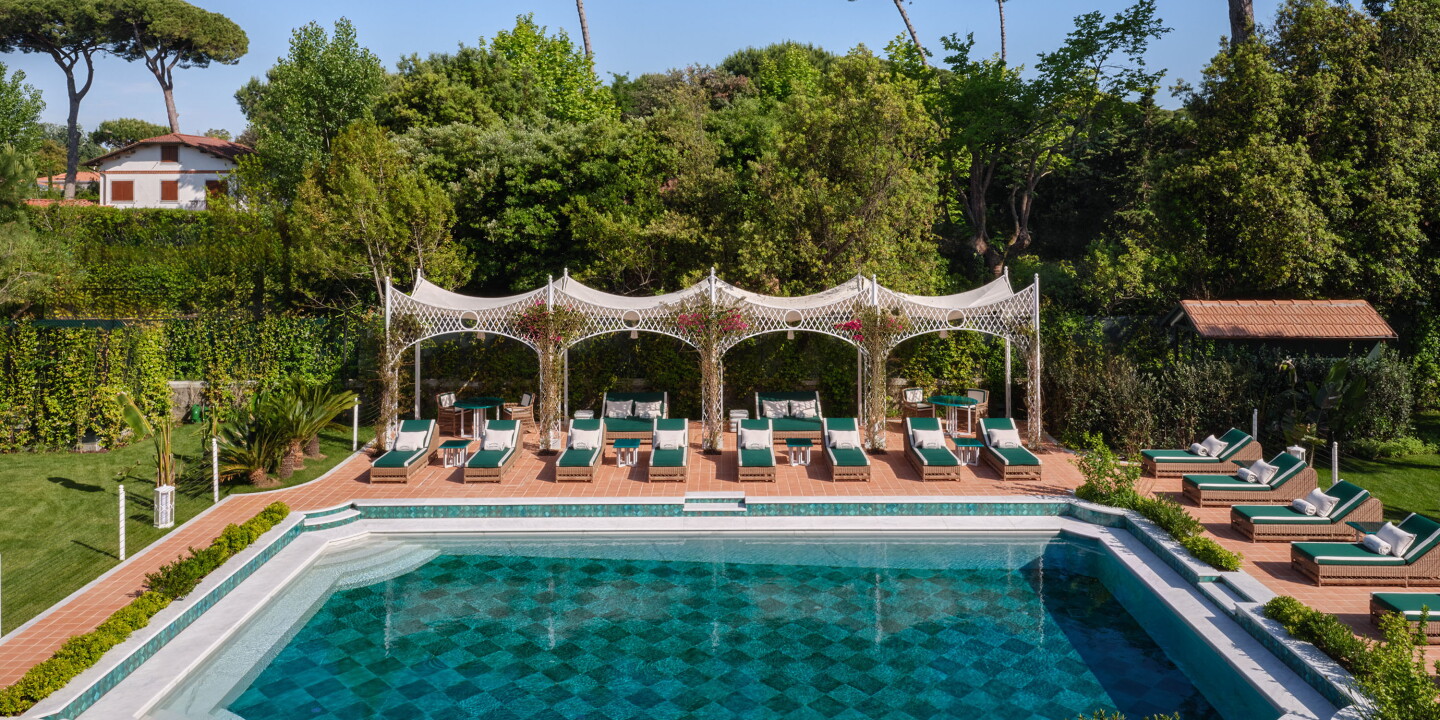
Opened in 2025 after a four-year renovation, Pensione America brings latest life to a historic villa in the center of Forte dei Marmi. Originally in-built 1899 because the private home of a Roman artist, the property became a pensione, or “boarding house,” in 1922. Though it’s now a high-end hotel, the Maestrelli family, which owns and operates the hotel through its hospitality brand Collezione EM, kept the unique name as a nod to each the villa’s history and Forte dei Marmi’s long tradition as a summer retreat for aristocratic Florentine families.
The atmosphere is breezy and coastal, with bamboo and rattan furnishings, oversize banana plants, stacks of books, and a baby grand piano within the common spaces. Mornings begin with a leisurely breakfast of cream-filled cornetti (an Italian pastry), eggs, and fresh smoothies before guests pedal borrowed bicycles toward the beach or the boutiques on the town. The family also owns nearby beach club Bagno Assunta, where retro wood loungers and a relaxed seafood restaurant exude Riviera charm.
Reschio Hotel
Count Benedikt Bolza moved to Umbria in 1999 to assist his father transform the derelict farmhouses on the sprawling Reschio estate right into a series of luxury farmhouses. He and his wife raised their five children within the thousand-year-old castle on the estate before transforming it right into a timeless five-star boutique hotel.
By the point they began renovating the castle, Count Bolza, an architect, had already established a successful design practice creating bespoke furniture for the villas. So it was only natural for him to design original furniture and lighting for the hotel. Every detail within the 36 guest rooms and suites, with their four-poster beds and wood-beam ceilings, has been meticulously planned for the visitor experience, from the dressing tables with hidden sockets to the custom espresso machines. Reschio was designed to make guests decelerate and embrace easy countryside pursuits, from foraging and gathering wildflowers to riding horses and falconry.
Related: These Are the 15 Best Hotels in Italy
Santavenere
The sprawling Santavenere sits in considered one of the villages recognized by I Borghi più belli d’Italia, the country’s organization dedicated to preserving Italy’s most beautiful historic towns. It was originally in-built the Nineteen Fifties by Count Stefano Rivetti, who drew celebrities and musicians to the property during its heyday. The hotel was recently revived by Paolo Barletta, the developer behind the Orient Express La Minerva in Rome, and Aldo Melpignano, the hotelier behind Borgo Egnazia.
A captivating retro vibe still reigns, from colourful tile floors and antiques within the rooms to the extensive gardens, beach club, and pool. Better of all, the craggy coastline and sleepy village nearby evoke the Amalfi Coast within the Nineteen Fifties, before the crowds arrived.
Vico Milano
In a city increasingly dominated by big hotel brands, Vico Milano looks like a secret hotel for Milan insiders. Hidden behind the courtyard of a residential constructing in Milan’s Corso Genova neighborhood, the hotel is the eagerness project of Neri Baccheschi Berti—whose family owns Castello di Vicarello—and his wife, Akriti Baccheschi Berti.
The couple filled the intimate subterranean lounge and 7 rooms and suites with an eclectic mixture of midcentury-modern pieces and vintage finds from their travels. They recently added a dual speakeasy and restaurant where you would possibly start with a Martini before moving on to a wealthy risotto alla Milanese.
Villa Paola
Villa Paola, on a cliff overlooking the historic center of Tropea, occupies a former Sixteenth-century convent connected to a Liberty-style villa surrounded by terraced gardens full of bougainvillea, caper vines, and other Mediterranean greenery. It’s a 15-minute walk to the middle of town, yet the property looks like a peaceful respite: Take a dip within the infinity pool overlooking the Mediterranean, practice yoga beneath the trees, or linger over slow meals on the terrace.
A recent renovation refreshed the hotel’s 14 rooms and suites with earth tones and natural materials that complement the constructing’s historic bones. The fine-dining restaurant, De’ Minimi, is taken into account top-of-the-line in Tropea, while the more relaxed bistro serves light lunches and aperitifs on a terrace overlooking the ocean.
Violino d’Oro
A five-minute walk from Piazza San Marco, Violino d’Oro offers a classy retreat from Venice’s busiest streets. A part of Collezione EM, the Maestrelli family’s small collection of Italian hotels, the property is a celebration of Italian craftsmanship and design. Sara Maestrelli and her aunt Elena conceived the hotel because the home of well-traveled collectors, filling it with pieces that span centuries and styles.
Throughout the hotel are 18th-century gilded mirrors hand-painted with carnival figures, midcentury lamps by Gae Aulenti and Carlo Scarpa, and sofas upholstered in fabrics by Rubelli in collaboration with British artist Luke Edward Hall.
The 32 guest rooms proceed the eclectic aesthetic with chinoiserie wardrobe panels, vintage-inspired credenzas concealing minibars and espresso machines, and gold-painted wood boxes crafted by a Florentine artisan. Il Piccolo Bar within the lobby lounge serves creative cocktails and cicchetti (snacks and small plates), while Il Piccolo Restaurant focuses on seafood from the Venetian lagoon alongside plant-forward dishes.
Related: This Recent Boutique Hotel in Venice Connects You to the City’s Best Artisans
Unlock the world’s wonders with unforgettable journeys tailored just for you! Whether you crave sun-kissed beaches, thrilling adventures, or rich cultural escapes, your dream destination awaits. Enjoy seamless travel with expert tips, exclusive deals, and handpicked experiences that Turn Every Trip into a lifetime memory.